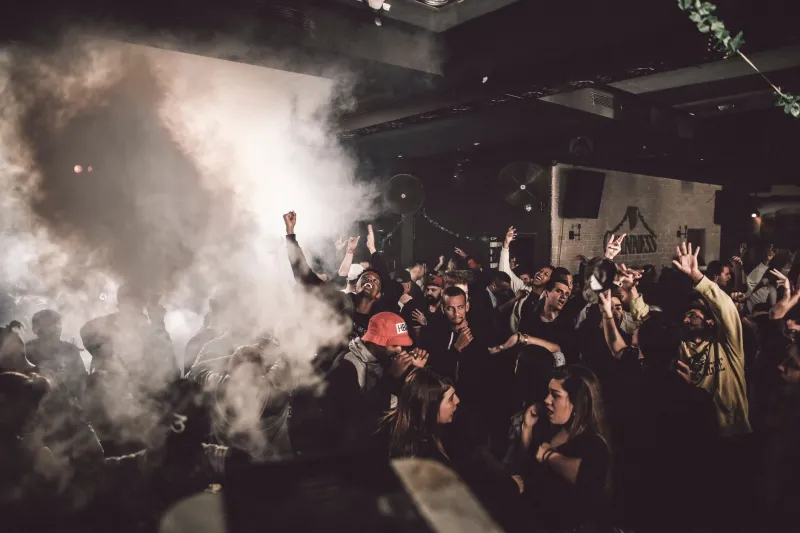
Dashboard Raves: How Late-Night Drivers Turned Their Cars Into Moving Club Floors
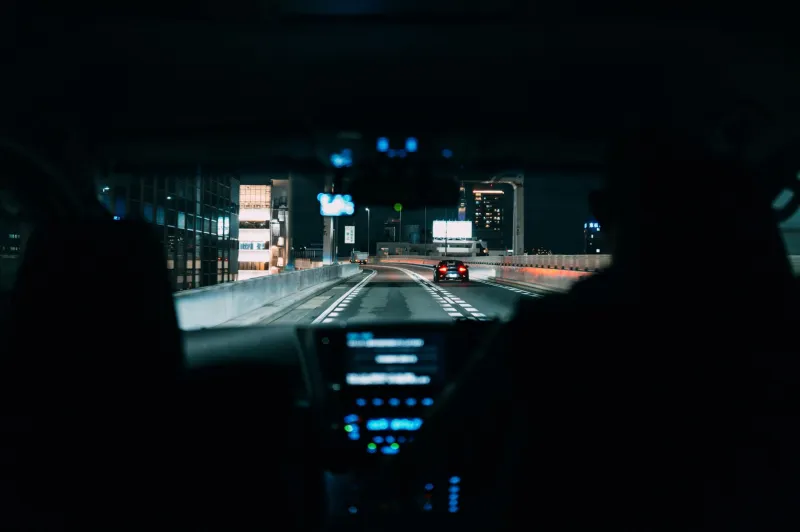
It's 1:47 AM somewhere on I-80 between Chicago and Des Moines. The road is mostly empty. There's a trucker a quarter mile ahead, a pair of headlights in the rearview. And in a 2019 Honda Civic, a night-shift nurse on her way home from a double is three-quarters of the way through a two-hour techno set streaming live from a club in Berlin.
She found it through a Discord server. The audio is running through her car's Bluetooth. The bass response isn't club-level — obviously — but she's got the volume high enough that she can feel the kick drum in the seat. She's not dancing, exactly. But she's not just driving, either.
This is a thing now. A real, growing, genuinely fascinating thing.
America Was Always Built for This
Car culture and music culture have been intertwined in the United States since before anyone was calling it either of those things. The drive-in, the road trip mixtape, the car stereo as a status object — Americans have always treated their vehicles as personal listening environments. We spend more time in cars than almost any other country on earth, and a significant chunk of that time is spent with music.
What's changed is what's available to listen to. For most of music history, late-night driving meant radio — whatever the local FM station was playing, or, if you were lucky, a late-night specialty show that actually played something interesting. Then it was CDs, then iPods, then streaming playlists. Each step gave drivers more control over what they heard.
Live streaming is something different. It's not a recording you curated at home and brought with you. It's a real-time broadcast of something happening somewhere else — a DJ playing a live set in a club, a radio station streaming its overnight programming, a producer doing a spontaneous session in their studio at 2 AM. For electronic music specifically, where the energy of a live performance is so central to the experience, that distinction matters.
The Technology Stack Making It Work
A few converging developments made dashboard raving genuinely viable in the last few years. Reliable in-car 5G connectivity — either through hotspots or integrated into newer vehicles — means streaming a high-quality audio broadcast on a long drive is no longer a buffering nightmare. Apple CarPlay and Android Auto have made it easier to access streaming apps directly through the car's interface without fumbling with a phone mount. And the audio quality in even mid-range vehicles has improved substantially.
Platforms that support live streaming have proliferated too. Twitch, which most people associate with gaming, has a robust music streaming community that includes regular DJ sets and live club broadcasts. Mixcloud and similar platforms have live features. Some clubs stream directly to YouTube or through custom apps. Radio shows like Boiler Room — which has been broadcasting live DJ sessions for over a decade — have massive audiences that tune in exactly the way you'd tune into a radio station, just on-demand and live-streamed rather than over the air.
The result is that a driver in rural Nebraska can, at 2 AM, tune into a live set from a club in New York, Los Angeles, or London with roughly the same friction as finding a radio station. That's a genuinely new situation.
Who's Actually Doing This?
The late-night driver-raver isn't a single demographic. Based on conversations with people who've described this habit, a few distinct groups emerge.
There are the overnight workers — nurses, delivery drivers, warehouse employees, long-haul truckers — who are on the road during the hours when club music is actually being played live. For them, tuning into a live set isn't an attempt to replicate a club experience; it's just the best available music for the hours they're keeping.
Then there are the actual club-goers who, for whatever reason — distance, responsibility, cost — can't make it out but want to stay connected to what's happening. Streaming a live set from a venue they know, featuring a DJ they follow, is a way of participating in the culture even when they can't be physically present.
And then there's a third group that's harder to categorize: people who've discovered that driving alone at night, with the right music, is its own kind of experience. Not a substitute for the club. Something different — more solitary, more contemplative, but still genuinely energizing in a way that a playlist or a podcast isn't.
"There's something about driving at night with a live set that feels like the music is actually happening in real time with you," one person described it. "A playlist feels like you're listening to something that already happened. A live stream feels like now."
The Neuroscience of Why This Works
That intuition about liveness turns out to have some scientific backing. Research on music and driving has consistently shown that tempo and energy level in music affect driver arousal and alertness — high-energy music keeps drivers more alert on long overnight drives, which is relevant for obvious safety reasons. But there's also evidence that music listeners respond differently to live versus recorded performances, even when the audio quality is comparable.
The sense that something is happening in real time — that a DJ is making decisions right now, that a crowd somewhere is responding to the same music you're hearing — activates social cognition in ways that a recording doesn't. You're not just listening. You're participating, at least imaginatively, in a shared experience. For a solo driver at 2 AM, that sense of connection is not nothing.
Electronic music is particularly well-suited to this context. The genre's emphasis on extended builds, evolving textures, and sustained energy arcs maps well onto the temporal experience of a long drive. A two-hour DJ set and a two-hour overnight commute are almost perfectly matched in duration. And the music's roots in late-night, altered-state listening mean it's already calibrated for the specific kind of attention that driving at night produces — focused but loose, alert but dreamy.
Where This Goes
The dashboard rave phenomenon is still pretty informal — people discovering it on their own, sharing the habit in communities, building playlists and station bookmarks without any particular infrastructure supporting them. But it's easy to imagine that changing.
Clubs and radio platforms that figure out how to speak directly to the late-night driver audience — through dedicated programming, better in-car app integration, or simply by acknowledging that a significant portion of their listeners are behind the wheel — are sitting on something real. The audience is there, the hours align, and the technology is ready.
For now, though, it's mostly just happening organically. Somewhere on a dark highway right now, someone's got the volume up, the kick drum rattling the rearview mirror, and a DJ in a club they've never been to keeping them company all the way home. The dance floor found its way into the driver's seat. Turns out there was always room.