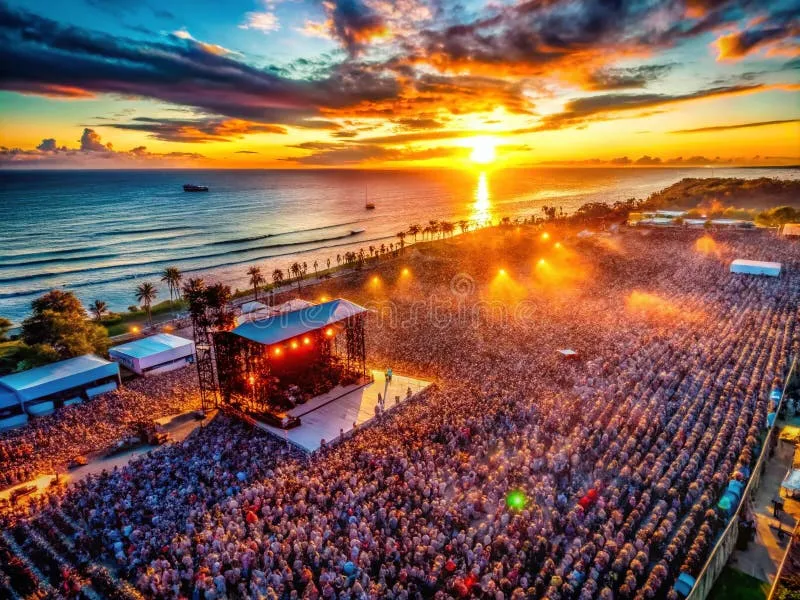
Zero to Main Stage: How Fast Is the New Fast in Electronic Music?
There used to be a pretty standard story in electronic music. You spent years grinding local club nights. You pressed white-label vinyl that maybe 400 people ever heard. You built a following city by city, year by year, until eventually — maybe — a festival booking came through. That story still exists. But it's no longer the only one, and increasingly, it's not even the most common one.
The timeline from "who is this?" to "how is this person already headlining?" has collapsed in ways that would have seemed genuinely impossible ten years ago. And depending on who you ask, that's either the most exciting thing to happen to dance music in decades — or a sign that something important is getting lost.
The Numbers Are Hard to Argue With
Look at what happened with artists like Knock2, Subtronics, and more recently, acts like Shakewell or Mochakk. These aren't decade-long overnight successes. These are producers who went from releasing music to booking festival slots within timelines that would've been laughably optimistic in the pre-streaming era.
Knock2 is a particularly sharp case study. His track "dashstar*" didn't just go viral on TikTok — it became a sound, a reference point, a thing that other creators used as a backdrop for millions of pieces of content. That kind of exposure used to take years of radio play and label backing to manufacture. Now it can happen because an algorithm decided your drop pattern matched what 2 million people were already listening to at 11pm on a Thursday.
Subtronics' rise through the bass music underground tells a slightly different version of the same story: deep community investment in Reddit, Discord, and streaming platforms, paired with a distinctive sound that gave fans something to evangelize. No major label. No traditional press campaign. Just music, consistency, and a fanbase that showed up.
What Actually Compresses the Timeline
It's tempting to say "TikTok" and call it a day, but the real answer is more layered than that.
Streaming platforms democratized distribution in a way that removed the gatekeeper function that labels used to hold exclusively. When anyone can put a track on Spotify, Beatport, or SoundCloud overnight, the bottleneck shifts from access to attention. That's a meaningful change.
Remix culture functions as an unofficial A&R system. When an established producer picks up a younger artist's track and remixes it — or when a new producer drops a remix of a popular record that genuinely slaps — it plugs them directly into an existing audience. A remix by the right person at the right moment can do more for a career than a year of club bookings.
Collaborative features work similarly. A guest spot on a track by someone with 2 million monthly Spotify listeners is essentially a warm introduction to an audience that already trusts the person vouching for you. In a media environment drowning in content, trust-transfer is enormously powerful.
And then there's the algorithm itself — not just TikTok's, but Spotify's editorial playlists, Apple Music's New Music Daily, SoundCloud's trending charts. These systems reward a specific kind of consistency and engagement velocity that skilled producers can learn to work with. It's not gaming the system exactly; it's understanding how the system thinks and creating accordingly.
The "Paying Your Dues" Debate
Here's where things get genuinely complicated, because the old guard has a point — even if they sometimes make it in the most annoying way possible.
The traditional grind of club nights, local residencies, and years of audience-building wasn't just hazing. It built something real: the ability to read a room, to feel when energy is dropping and course-correct in real time, to understand the physical and emotional mechanics of what it means to move a crowd. You can't learn that from analytics.
There are young artists right now who have 50,000 monthly listeners and festival bookings who have never played a club set longer than 45 minutes. Some of them are going to be absolutely fine — natural performers who adapt quickly. Others are going to step onto a big stage and discover that producing music and DJing to a crowd of thousands are two genuinely different skills.
But here's the counter-argument: the music industry has always had artists who developed unevenly. The old system produced plenty of technically proficient DJs who were creatively stagnant. Fast timelines don't automatically produce shallow artists — they just produce artists who developed differently.
The Artists Who Are Getting It Right
What separates the acts who blow up fast and sustain it from those who flame out? A few patterns emerge consistently.
First, a genuinely distinctive sound. Virality can launch you, but it can't keep you in the air if there's nothing underneath. The artists building real careers have something identifiable — a production signature, a sonic world that fans can recognize and return to.
Second, community investment. The artists who last aren't just broadcasting; they're in conversation. They're in their Discord. They respond to comments. They talk about their process. In a landscape where attention is the scarce resource, genuine connection is a moat.
Third — and this is the one that's hardest to manufacture — they keep releasing music. Consistency in the streaming era isn't optional. An artist who drops a viral moment and then goes quiet for 18 months while working on an album is fighting an uphill battle against the algorithm's short memory.
So Is the New Timeline Actually Better?
Honestly? It's just different. The compressed pathway is real, and it's created genuine opportunities for artists who would have struggled to break through in a system controlled by labels and radio. That's worth celebrating.
But the speed also means less time to develop before you're in high-stakes environments, less margin for the kind of artistic experimentation that happens when nobody's watching, and a pressure to be perpetually visible that burns people out in ways that are still playing out in real time.
The artists who figure out how to move fast and build deep — who use the tools of the new landscape without being consumed by them — those are the ones worth watching. And right now, there are more of them than ever before.