Old Records, New Energy: Why '90s and '00s Club Classics Are Owning 2025 Dance Floors
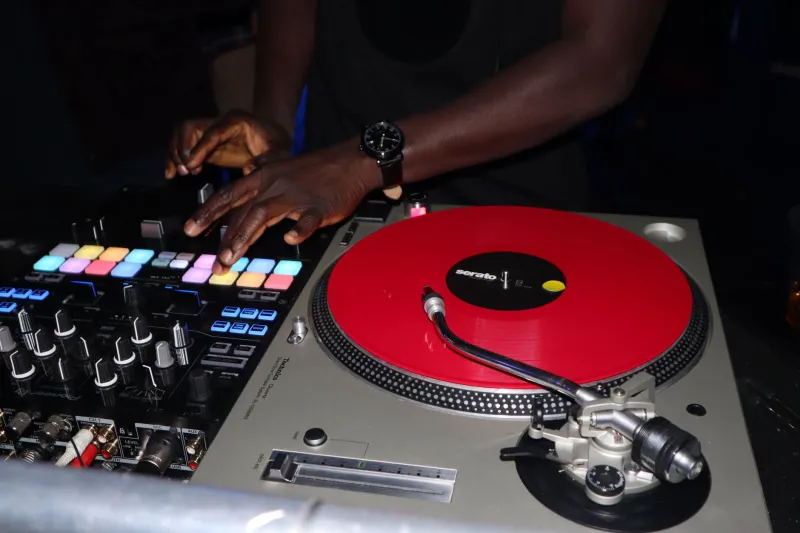
It's a Tuesday night at a mid-size club in Nashville. The DJ drops a pitched-up, chopped edit of a Daft Punk track from 1997 and the floor—mostly 22-to-28-year-olds—absolutely loses it. Not in a nostalgic, ironic way. In a genuine, arms-up, screaming-the-melody way. Half these people weren't born when "Around the World" first charted. And yet here they are, feeling it in their bones.
This is the 2025 dance floor reality. Nostalgia isn't just a mood anymore—it's a dominant musical force reshaping club culture from the inside out.
The Cycle Comes Around Again
Music has always been cyclical. The 25-to-30-year nostalgia loop is well-documented across pop culture—fashions, films, and sounds tend to resurface roughly a generation after their original moment. By that math, it makes complete sense that the late '90s and early 2000s are having their moment right now. What's different this time is who is driving the revival.
It's not the people who lived through it the first time. It's their younger siblings and, increasingly, their kids.
Gen Z's relationship with older music is genuinely unlike any previous generation's. Thanks to algorithmic rabbit holes, YouTube archiving, and the total collapse of release-date relevance on streaming platforms, a 19-year-old in 2025 has had the same access to a 1998 Todd Terry record as they have to something that dropped last week. Music history isn't history to them—it's just the catalog.
"They don't experience old tracks as retro," says one DJ and producer based in Chicago who has been incorporating classic house and eurodance edits into their sets for the past two years. "They just hear it as good music. The year it came out is basically irrelevant to how they feel about it."
What's Actually Getting Played
The tracks making the biggest impact aren't necessarily the chart-toppers everyone remembers. Alongside obvious crowd-pleasers from artists like Basement Jaxx, Fatboy Slim, and Armand Van Helden, it's the deeper cuts that are generating the real heat—tracks that flew under the mainstream radar the first time but are finding their audience now.
Tracks from the nu-NRG and progressive house scenes of the early 2000s are circulating heavily in DJ circles. Late '90s Chicago house records are being re-pressed and selling out. And the harder, more industrial sounds of early 2000s electro—stuff that felt too edgy for mainstream clubs at the time—are finding huge receptive audiences among listeners who've been raised on hyperpop and industrial techno.
TikTok is doing a significant amount of the distribution work here. A 15-second clip of a forgotten eurodance track used in a trending video format can generate enough streams to push that song back onto editorial playlists. From there, DJs notice. Clubs notice. And a track that peaked at number 47 in the UK in 2001 suddenly has a second life in a Denver warehouse in 2025.
The Science of Why Old Music Hits Hard
There's a neurological component to this that's worth understanding. Research in music cognition consistently shows that humans are drawn to music that sits in a sweet spot between familiarity and surprise. Tracks we've heard before but not too recently trigger a satisfying predictive response in the brain—we anticipate the drop, the melody, the hook, and when it arrives, the reward circuit fires hard.
For Gen Z listeners hearing these tracks for the first time, the effect is slightly different but equally powerful. The production techniques of late '90s and early 2000s dance music—big chord stabs, filtered disco loops, dramatic build-and-release structures—are fundamentally satisfying on a psychoacoustic level. They were engineered for peak-time club play, and that engineering doesn't expire.
There's also an element of cultural contrast at work. After years of minimal, textureless production dominating the underground, the lush maximalism of a 1999 Basement Jaxx record sounds genuinely fresh. The excess that once felt dated now sounds adventurous.
The Edit Economy
One of the most interesting commercial dimensions of this trend is the cottage industry that's grown up around it. Producers are building entire careers on re-edits and reworks of classic club material—stripping tracks down, speeding them up, layering in contemporary sound design, and releasing them as unofficial bootlegs or through licensing deals with original rights holders.
The financial model is complicated. Some classic tracks are tied up in rights nightmares that make official re-releases nearly impossible. Others have been snapped up by publishing companies who are actively courting producers for authorized remixes. The result is a two-tier ecosystem: polished official remixes sitting alongside underground edits that circulate through DJ pools and private channels, both feeding the same appetite.
For original artists, the situation is genuinely strange. Some are experiencing streaming revenue spikes from music they made decades ago, driven by listeners who weren't alive when it was recorded. Others are being approached for live sets and festival bookings—performing material they shelved years ago to crowds who treat it as essential listening.
What Comes Next
If the pattern holds, the mid-2000s era is next in line for rediscovery. Early electro house, fidget house, the first wave of EDM before it became a stadium phenomenon—all of that sits just outside the current nostalgia window, which means it's probably about two to three years away from its moment.
For now, though, the late '90s and early 2000s have the floor. And if you're a DJ still sleeping on those records, you might want to dig through your crates—or your parents' crates—before someone else does.