Engineering the Gut Punch: What Actually Makes a Drop Hit Hard in a Real Club
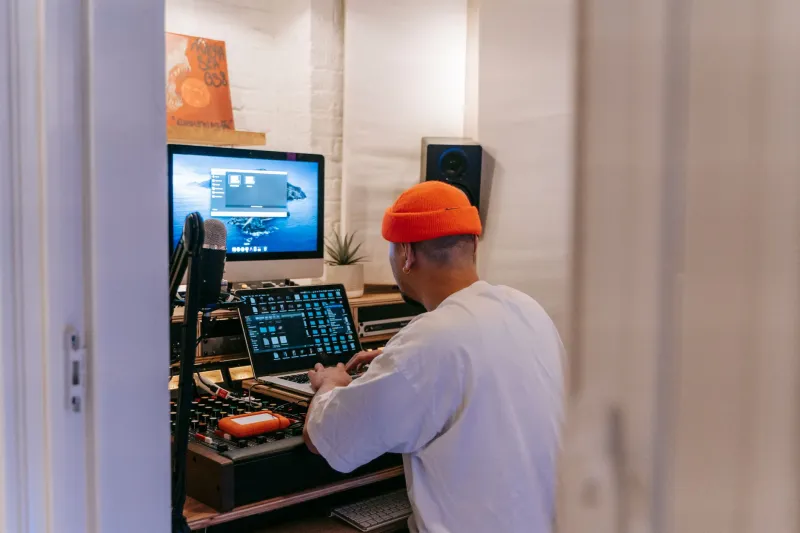
You've felt it. That moment when a track opens up and something shifts in your chest — not metaphorically, physically. Your sternum vibrates, your feet move before your brain catches up, and whatever you were thinking about completely evaporates. That's not an accident. That's engineering.
The gap between a track that sounds decent on headphones and one that annihilates a room full of people on a professional sound system is enormous. And it comes down to a set of very specific technical choices that most listeners never consciously notice — but their bodies absolutely do.
We dug into the studio science behind dance floor dominance, pulling insights from producers and audio engineers who've built tracks that have held floors from Miami to Minneapolis.
The Frequency Stack: Why It's Not Just About Bass
The first misconception most aspiring producers carry into the studio is that a hard-hitting drop is mostly about bass. It's not — or at least, it's not only about bass. What actually makes a drop feel enormous is how frequencies are layered across the entire spectrum, working together to create a sense of physical mass.
Producer and audio engineer Marcus Webb, who's worked on releases for several mid-major US dance labels, explains it this way: "The sub-bass is the foundation, but the sub-bass alone doesn't move people. What moves people is when the sub hits at the same time as a mid-range punch — usually somewhere between 80 and 250 Hz — and there's enough high-end presence to give it clarity. You need all three layers to feel like one thing."
This concept is sometimes called frequency stacking, and it's why a track can have a technically loud bass line that still feels thin in a club environment. If the mid-range isn't reinforcing the low end, the bass sounds like it's happening under the music rather than through it.
The fix isn't always adding more. Often it's carving out space — using surgical EQ to remove frequencies that are competing with each other, letting each layer breathe so the whole thing lands as a cohesive impact rather than a muddy wall of sound.
Transient Design: The Attack Is Everything
If frequency stacking is about what you feel in your body, transient design is about what your nervous system registers in the first milliseconds of a sound. Transients are the initial attack of any audio event — the sharp front edge of a kick drum, the click of a bass hit, the crack of a snare.
In a club context, transients are critical because they're what give a track its sense of rhythm and momentum. A kick drum with a weak transient gets lost in a room. A kick with a well-designed transient cuts through even at high volumes and gives dancers something precise to lock onto.
"I spend more time on the transient of my kick than almost anything else in the mix," says Chicago-based producer Delia Voss, whose tracks have been licensed for use in several prominent US festival stage compilations. "I want it to be felt before it's heard. That little bit of click at the very top of the waveform — that's what your brain registers as the beat. If that's soft or smeared, the whole groove feels lazy."
Transient shapers and multi-band compression are the tools most producers use here, but the underlying principle is simple: sharpen what needs to be sharp, sustain what needs to sustain, and never let the two blur together.
Spatial Processing: Making the Room Feel Bigger Than It Is
One of the most underappreciated elements of a club-ready mix is how space is handled. Not physical space — sonic space. The width, depth, and sense of three-dimensionality that a well-processed track creates when it's pumping through a large sound system.
This is where stereo imaging, reverb design, and mid-side processing come into play. Used well, these tools can make a drop feel like it's expanding outward from the speakers and filling the entire room. Used badly, they create a mix that sounds wide on headphones but collapses to a messy mono blob when played on a club's mono-compatible system.
This is a trap a lot of bedroom producers fall into. They mix on stereo monitors or headphones, create a beautiful wide soundscape, and then hear it played out and wonder why it sounds flat. The answer is almost always that their stereo width was being generated by phase-based tricks that don't survive mono playback.
Audio engineer Priya Chandrasekaran, who works with several touring US electronic acts, recommends a simple rule: "Check your mix in mono constantly. If it falls apart, your width isn't real. Real width survives mono. Fake width disappears."
For reverb, the key in a dance context is subtlety and placement. A large hall reverb on a lead synth might sound cinematic in isolation, but in a club mix it creates a wash that muddies the groove. Most experienced producers use shorter, tighter reverbs — or even just pre-delays — to create the impression of space without sacrificing punch.
Practical Takeaways for Aspiring Producers
If you're making tracks and wondering why they don't hit the way you expect in a live setting, here are the most common fixes worth exploring:
Reference on real systems whenever possible. Your studio monitors are a starting point, not the final word. Find a way to hear your mixes on a proper PA — even a rehearsal space or a borrowed club night — before you call something done.
Sidechain compression isn't just a style choice. Properly executed sidechain between your kick and your bass creates the pumping, breathing quality that makes club tracks feel alive. It also prevents low-end frequency collision that kills clarity.
Less is more in the drop. Many producers instinctively want to pile on elements at the drop. Often, the opposite works better. Stripping back to a few perfectly designed sounds — a tight kick, a clean bass, one defining lead — can hit harder than a wall of layered noise.
Gain staging matters more than you think. Pushing every element to the loudest point before mastering doesn't create energy. It creates ceiling. Leave headroom, let your transients actually peak, and trust the mastering process to handle the final volume.
The dance floor is the ultimate testing ground. And the tracks that pass that test aren't the ones made with the most expensive gear or the most complex arrangements. They're the ones where every technical decision was made in service of a single goal: making a room full of people feel something they can't quite explain, right in the middle of their chest.