From the Basement to Billboard: How Underground Club Culture Is Quietly Rewriting Mainstream Music
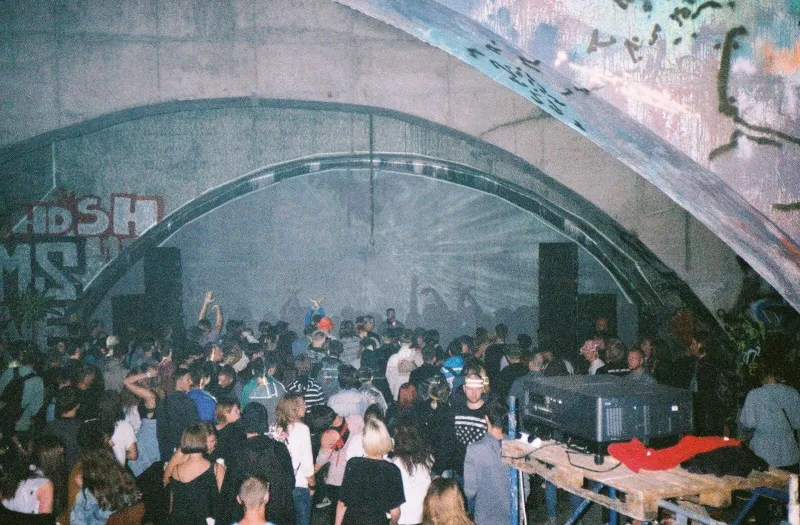
Photo: underground warehouse rave party crowd dark lights, via i.pinimg.com
If you've caught yourself nodding to a track on mainstream radio lately and thinking, wait, this sounds like something I heard at a warehouse party two years ago — you're not imagining things. The underground is winning. Quietly, persistently, and with zero interest in asking permission.
Across the US, a fascinating cultural transfer is happening in real time. Sounds that were once exclusive to 200-person basement raves in Chicago, underground loft parties in Brooklyn, or late-night warehouse events in Los Angeles are showing up in major label releases, streaming algorithm picks, and even network TV commercials. The question worth asking is: how exactly does a sound travel from a fog-machine-filled room with no cell service to a Spotify editorial playlist?
The Underground Has Always Fed the Mainstream — But Not Like This
This isn't a new phenomenon, exactly. House music was born in Chicago clubs. Techno came out of Detroit. Drum and bass was a London basement export. What is new is the speed of the transfer and the tools making it happen.
"The old timeline used to be five to seven years," says Marcus Delray, a Chicago-based DJ and promoter who's been running underground events on the city's South Side for over a decade. "A sound would bubble up, get picked up by bigger DJs, maybe land a licensing deal, and slowly creep into the mainstream. Now? I'm hearing stuff from our parties on TikTok within weeks. It's wild."
That TikTok factor is impossible to overstate. The platform's algorithm doesn't care whether a track came from a major label or a SoundCloud upload with 300 plays. If the audio connects — if it makes someone stop scrolling, repost, or stitch — it moves. This has fundamentally democratized music discovery in a way that even streaming services haven't fully managed.
A clip of a crowd losing their minds to an unreleased DJ edit at a Brooklyn warehouse party can rack up millions of views overnight. Labels watch those numbers. A&R reps have TikTok accounts. The feedback loop is brutally fast.
Intimacy as Innovation
There's something about the scale of underground events that breeds musical risk-taking. When you're playing for 150 people who showed up specifically because they trust your taste, you can push boundaries that would terrify you on a festival main stage.
"You can drop something completely unrecognizable at a small venue and read the room in real time," explains DJ Selene, who runs a monthly underground techno event in a repurposed warehouse space in Detroit. "If people respond, you know you've got something real. It's like a petri dish for new sounds. The feedback is immediate and honest."
That intimacy creates an environment where experimentation isn't just tolerated — it's expected. Promoters in smaller markets have noted that their attendees actively want to hear things they've never heard before. Contrast that with a 50,000-person festival crowd, where set lists often lean heavily on recognizable anthems because the risk of losing the audience is too high.
This dynamic means the underground is perpetually ahead of the curve, almost by design.
The Promoter Pipeline
Behind every buzzing underground scene is a network of promoters doing unglamorous, low-margin work that rarely gets recognized. These are the people renting out spaces, booking emerging artists, and building communities around sounds that haven't been validated by mainstream tastemakers yet.
In cities like Atlanta, Miami, and Denver, a new generation of independent promoters is operating with a distinctly modern playbook. They're using Discord servers to build tight-knit communities, Instagram to drip-feed event details, and carefully curated guest lists to maintain the underground feel even as their events grow.
"We're intentional about keeping things small," says Priya Nambiar, who promotes a monthly deep house event in Atlanta. "Once a night gets too big, it loses the thing that made it special. So we'd rather start a second night than let the original one get watered down."
This philosophy of intentional scarcity is itself becoming a mainstream marketing strategy. Major festival brands have started launching boutique side events specifically to capture that underground energy — an acknowledgment that the big stage can't replicate what happens in a small room.
When the Algorithm Meets the Afterparty
TikTok isn't the only platform accelerating this pipeline. YouTube DJ mixes, Boiler Room-style livestreams, and even Reddit communities dedicated to niche subgenres are all functioning as discovery engines that route underground sounds toward wider audiences.
Boiler Room, the London-born live stream platform that regularly films sets in underground venues worldwide, has arguably done more to bridge the underground-mainstream gap than any single label or media outlet. Their US events — in New York, LA, Chicago — consistently introduce artists to global audiences who would never have stumbled across them otherwise.
Streaming platforms are paying attention too. Spotify's editorial team has quietly been building playlists that spotlight emerging underground sounds, and Apple Music's radio programming has increasingly featured mixes from DJs who built their reputations in club environments rather than festival circuits.
What the Mainstream Takes — and What Gets Left Behind
It would be naive to pretend this cultural transfer is frictionless or fair. When underground sounds go mainstream, something often gets lost in translation. The context, the community, the cultural roots — these don't always make the trip.
Detroit techno's journey into European commercial dance music is the canonical example. The music traveled; the credit and economic benefit to Detroit's Black creators largely didn't. That history casts a long shadow over conversations about how underground culture gets absorbed.
"There's a difference between being inspired by something and actually supporting the community that created it," Marcus Delray notes. "I'd love to see more of the mainstream industry invest back into the underground spaces that feed them. Buy a ticket. Book a local artist. It's not complicated."
For now, the pipeline flows mostly in one direction — ideas moving up, money rarely moving down. But the awareness of this dynamic is growing, and more artists and promoters are actively negotiating for credit and compensation when their sounds get adopted.
The Next Sound Is Already Happening Somewhere You Haven't Heard of Yet
If history is any guide, the track you'll be obsessing over in 2027 is probably already being tested in a venue you've never visited, in a city that isn't on the festival circuit radar. Someone's playing it right now to a hundred people who are absolutely losing it.
The underground doesn't wait for permission, and it doesn't need a Billboard chart position to validate itself. It just keeps moving, keeps mutating, keeps feeding the machine — whether the machine acknowledges it or not.
That's always been the deal. And honestly? Long may it continue.