Flyover No More: How the Midwest Is Writing Electronic Music's Next Chapter
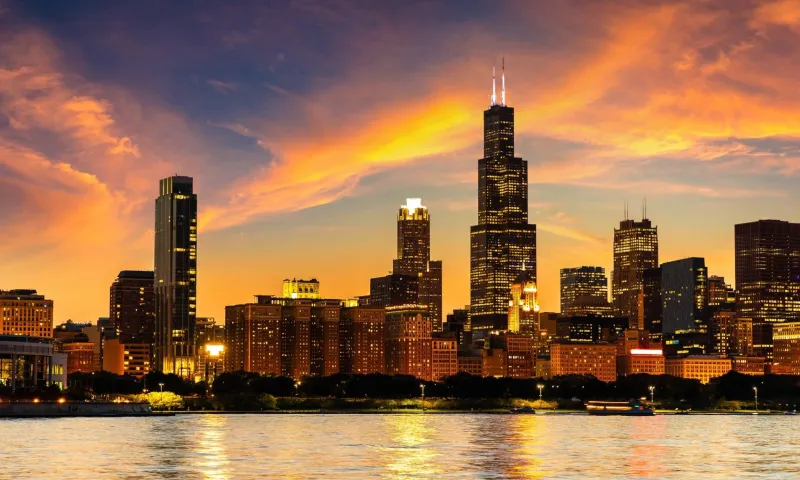
Photo: Chicago warehouse rave electronic music crowd night, via secretchicago.com
For years, the coasts got to tell the story of American dance music. New York had its legendary clubs, LA had its festival culture, and somewhere in between, the Midwest just kept throwing down — mostly for itself, mostly without the press coverage, and honestly? That might be exactly why it got so good.
Something has shifted, though. Over the past few years, the cities planted firmly in the middle of the country have started drawing serious attention from touring artists, booking agents, and music journalists who are finally catching on to what local heads have known for a long time. The Midwest isn't just participating in the electronic music conversation anymore. It's driving it.
Detroit Never Left — It Just Kept Going
Let's be clear about one thing: Detroit didn't suddenly become relevant. It was always the origin point. Techno was born here in the mid-1980s, shaped by the industrial landscape and the creative defiance of artists like Juan Atkins, Derrick May, and Kevin Saunderson. What's different now is that a new generation of Detroit producers is building on that legacy while taking it somewhere entirely their own.
Venues like TV Lounge and the Tangent Gallery continue to serve as proving grounds for artists who blend classic Motor City grit with contemporary production techniques. The Movement Electronic Music Festival, held every Memorial Day weekend in Hart Plaza, draws tens of thousands of attendees and has become one of the most critically respected electronic events in the country. But beyond the flagship festival, it's the year-round ecosystem — the underground parties, the record shops, the late-night jam sessions — that keeps Detroit's scene genuinely alive rather than just nostalgically preserved.
Local promoters like those behind the long-running Interdimensional Transmissions label have spent decades cultivating an audience that values substance over spectacle. That ethos is contagious, and it's spreading.
Chicago: Where House Music Lives and Breathes
If Detroit owns techno, Chicago owns house. Full stop. And right now, the city's relationship with its foundational genre is experiencing a kind of renaissance that feels both reverent and restless.
The South Side and West Side continue to nurture a deeply community-rooted approach to dance music, one that prioritizes the spiritual and social dimensions of the floor as much as the sonic ones. DJs and producers coming out of spaces like Smartbar — a club that has operated continuously since 1982 and remains one of the most important small venues in the country — are pushing house music into conversations about identity, healing, and collective joy.
What's particularly exciting is how Chicago's newer generation of artists is refusing to be boxed in. Producers are blending juke, footwork, and classic deep house with influences from global club scenes, creating sounds that are unmistakably Chicago but impossible to pin down on a genre chart. That creative friction is generating real heat, and booking agents from across the US and Europe are paying attention.
The city's festival landscape has also grown considerably. Events that started as small warehouse gatherings have scaled into multi-stage productions while somehow managing to hold onto their original community feel — a balance that coastal festivals often struggle to strike.
Minneapolis and the Cities You Didn't See Coming
Chicago and Detroit have history. But one of the most exciting stories unfolding right now is in cities that don't have the same canonical backstory — and are writing one in real time.
Minneapolis has quietly developed one of the most diverse and adventurous club cultures in the country. Anchored by a network of independent promoters and DIY venues, the Twin Cities scene leans into eclecticism. On any given weekend, you can find a deep minimal techno night happening a few blocks from a high-energy bass music party, both drawing passionate, knowledgeable crowds who show up because they genuinely love the music.
Kansas City, Columbus, and Indianapolis are seeing similar momentum. Smaller scenes, sure, but tighter ones — communities where the regulars know each other, where promoters take real risks on unfamiliar names, and where the energy on the floor has that particular intensity that comes from people who feel like they're part of something being built rather than something being consumed.
That feeling is rare, and it's increasingly what dance music enthusiasts are chasing.
What the Midwest Gets Right
Ask anyone who's played a Midwest room lately and they'll usually say the same thing: the crowds listen. There's less of the see-and-be-seen energy that can sometimes flatten the vibe in major coastal markets, and more of a genuine collective focus on the music itself.
That's not a knock on anywhere else — every scene has its own character and value. But it does speak to something real about how Midwestern club culture has developed. Without the constant influx of trend-chasing tourism, these scenes have had to sustain themselves on actual passion. The people in the room are there because they want to be there, because the music means something to them, because the dance floor is a place they've chosen rather than a place they've been told to go.
For producers and DJs building their careers, that kind of audience is invaluable. It sharpens your craft. It tells you quickly what's working and what isn't. It builds loyalty that lasts.
The Infrastructure Is Catching Up
For a long time, one of the practical challenges of the Midwest scene was logistics. Touring artists would often skip over the region in favor of more densely packed coastal routing, leaving local promoters to work harder to bring in outside talent. That's changing.
Improved venue infrastructure, stronger booking relationships, and a growing reputation for enthusiastic audiences are making Midwest stops more attractive for international and national touring acts. Several mid-sized markets now have dedicated electronic music venues with proper sound systems, professional lighting rigs, and the kind of technical setup that serious DJs expect.
At the same time, the region is producing enough homegrown talent that it doesn't need to rely solely on imports. The pipeline from local bedroom producers to regional headliners to national recognition is moving faster than ever.
The Energy Is Real
Electronic dance music has always been about finding the pulse — that moment when a room locks in and everything else disappears. The Midwest has been generating that feeling for decades, in basements and warehouses and converted industrial spaces, mostly without fanfare.
The fanfare is arriving now. And if you haven't made a trip to Detroit for Movement, caught a late-night Chicago house set at Smartbar, or stumbled into a Minneapolis warehouse party that runs until sunrise — you're missing some of the most vital electronic music experiences happening in America right now.
The middle of the country has always had the energy. The rest of the world is finally tuning in.